
Person Record
Images
Metadata
Name |
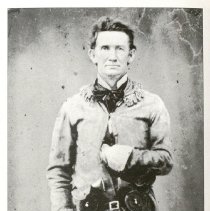
Ford, John Salmon "RIP" |
Born |
05/26/1815 |
Birthplace |
South Carolina |
Education |
He studied medicine and law |
Notes |
John S. Ford was born in South Carolina on May 26, 1815. He grew up on a plantation in Lincoln County, Tennessee. Ford was a good student and by the age of 16 was qualified to teach, but instead he went on to study medicine. He moved to Texas in 1836. Joining the Texas Army he served until 1838. Ford settled in San Augustine and practiced medicine for eight years. During this time he also studied law and passed the bar exam. In 1844 Ford was elected to the Texas House, where he introduced the resolution to accept annexation to the United States. This was the beginning of a long career of public service. Ford relocated to Austin in 1845 and reported on the activities of the annexation convention as a reporter for the Texas National Register. By the end of the year he had purchased the paper and changed the name to the Texas Democrat. During the Mexican War he served as regimental adjutant under Jack Hays. It was as adjutant that Ford earned his nickname "Rip." One of his main duties was to report on men killed in action. He completed each report with the words "rest in peace" after his signature. As the number of fatalities increased he abbreviated the phrase to "R.I.P." Soon the men were calling Ford "Old Rip." In 1849 Ford made an exploration of the country between San Antonio and El Paso, publishing a map of what became known as the Ford and Neighbors Trail. He was also named captain of Ranger company stationed between the Nueces and Rio Grande. In 1858 he accepted a commission in the state troops and defeated the Indians in two battles near the Canadian River. IN 1859 he and his troops were sent to the Rio Grande. Here they spent many months trying to quell the activities of Juan Cortina. During the Civil War Ford was elected colonel of the Second Texas Cavalry, with a command in the Rio Grande District. In May of 1865 he led the Confederate troops in the battle of Palmito Ranch, the last battle of the Civil War. In the years following the War, Ford continued his work as a newspaperman and politician. He was a member of the Constitutional Convention of 1875 and served in the Texas legislature from 1876 to 1879. In his later years, he wrote his reminiscences as well as several articles on Texas history. He died in San Antonio on November 3, 1897. He was buried beside the San Antonio River. |
Occupation |
Texas Ranger Republic of Texas Congress Mayor of Brownsville, Texas Doctor Lawyer Politician Journalist Civil War veteran |
Spouse |
Mary Davis |
Deceased |
11/03/1897 |
Deceased where |
San Antonio, Texas |
Additional Information |
Historic Event Article Indians and Rangers in the 19th Century Biographical Article Texas Ranger Grave Sites Biographical Article Texas Ranger Captains |
Related Records
-

-
Confederate Cavalry West of the River. The Pinkerton Story. - Library General Book Collection
RCB6109
Record Type: Library
-
Cult of Glory: The Bold and Brutal History of the Texas Rangers. - Library General Book Collection
RCB6589
Record Type: Library
-
Cult of Glory: The Bold and Brutal History of the Texas Rangers. - Library General Book Collection
RCB6597
Record Type: Library
-
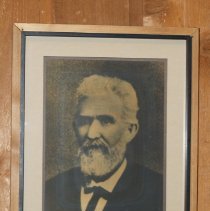
Fighting stock : John S. "Rip" Ford of Texas - Library General Book Collection
RCB2549
Record Type: Library
-
-
-
-
-
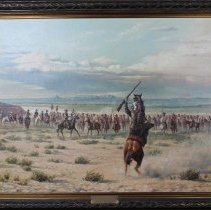
Rebellious Ranger: Rip Ford and the Old Southwest - Library General Book Collection
RCB0438
Record Type: Library
-
-
-
-
-
-
-
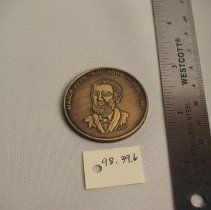
Texas Ranger Hall of Fame Commemorative Coin - Museum History Collection
1998.039.006
Record Type: Object
-
-
Texas Rangers: Lives, Legend, and Legacy. - Library General Book Collection
RCB6154
Record Type: Library
-
The highly irregular irregulars: Texas Rangers in the Mexican War. - Library General Book Collection
RCB1493
Record Type: Library